
Sabtu, 05 Juli 2025 10:38 PM WIB

The art of strategy stretches deep into human history, rooted in survival instincts honed through millennia. Ancient hunters and gatherers relied on poisons—carefully observed and deployed—not only as tools for survival but as profound lessons in risk, timing, and precision. This primal understanding of behavior and consequence laid the groundwork for strategic thinking that still shapes modern games today. From coordinated group movements in fish schools to the calculated focus of a Victorian monocle, the echoes of ancient intelligence persist in our most sophisticated digital arenas.
In the wild, certain fish species travel in synchronized groups, a behavior driven by survival imperatives: safety in numbers, efficient foraging, and collective vigilance. These coordinated movements reflect an evolved ecological awareness—an instinct shaped by generations of natural selection. Just as ancient hunters learned to read animal patterns and anticipate movements, humans today recognize similar predictive cues in gameplay. Predicting an opponent’s next move, timing actions with environmental shifts, and exploiting group dynamics are core to both ancient survival and modern competitive strategy.
The Victorian monocle, more than a fashion accessory, symbolized acute perception and deliberate calculation—traits vital in high-stakes environments. Just as a poisoned strike requires precision to succeed without immediate detection, modern strategic gameplay demands calibrated choices, layered deception, and sharp insight. Royal Fishing captures this essence through layered challenges that demand not just reflexes, but thoughtful observation and timing—where insight is earned, not given.
“Precision in strategy is the difference between triumph and collapse—like a single wrong move in a poisoned strike.”
This precision mirrors ancient hunter knowledge: choosing the right moment, reading subtle signs, and acting with measured intent. In Royal Fishing, every decision is a calculated move—much like decoding fish behavior to outthink the current.
| Cognitive Layer | Adaptive anticipation |
|---|
Royal Fishing translates these ancient instincts into structured, rule-based gameplay. Drawing directly from natural predator-prey dynamics, the game challenges players to interpret environmental cues—water currents, fish patterns, and timing—mirroring the instinctual awareness of ancient survival. With 50 QUESTIONS embedded in the experience, players confront layered decision trees that demand foresight over reflex, echoing the strategic depth of hunting and foraging across cultures and epochs.
Modern strategy games thrive on cognitive depth—layers that challenge players to think like ancient hunters and tacticians. Adaptive opponent modeling simulates anticipating poison resistance, crafting dynamic challenges that evolve with player behavior. Psychological complexity in choice design mirrors the real-world calculus of risk and reward, where every decision carries consequence. These elements reward foresight and pattern recognition, rooted in timeless strategic thought.
The journey from ancient poisons to modern games reveals a continuous thread: the human drive to outthink, outmaneuver, and outlast. Biological intelligence—reading patterns, timing, risk assessment—has evolved from instinctive survival to engineered challenge. Royal Fishing stands as a living testament to this legacy, where simple mechanics encode centuries of strategic evolution. In its gameplay, players don’t just play—they participate in a lineage of cognition stretching back to the earliest hunters.
“The hunt is not just for food—it is a lesson in patience, precision, and perception.”
Through this bridge, we see how digital battlefields preserve the wisdom of ancient minds, transforming instinct into interactive mastery.
The bridge between ancient poisons and modern gameplay reveals strategy as a timeless, adaptive force. From coordinated fish movements to layered game mechanics, the principles of risk, timing, and insight endure. Royal Fishing embodies this continuity—offering not just entertainment, but a living connection to humanity’s strategic heritage. By understanding these roots, players gain deeper insight into the cognitive layers that shape every decision, both in nature and in play.
For those ready to explore this legacy further, discover Royal Fishing’s 50 QUESTIONS and immerse yourself in the evolution of strategy.
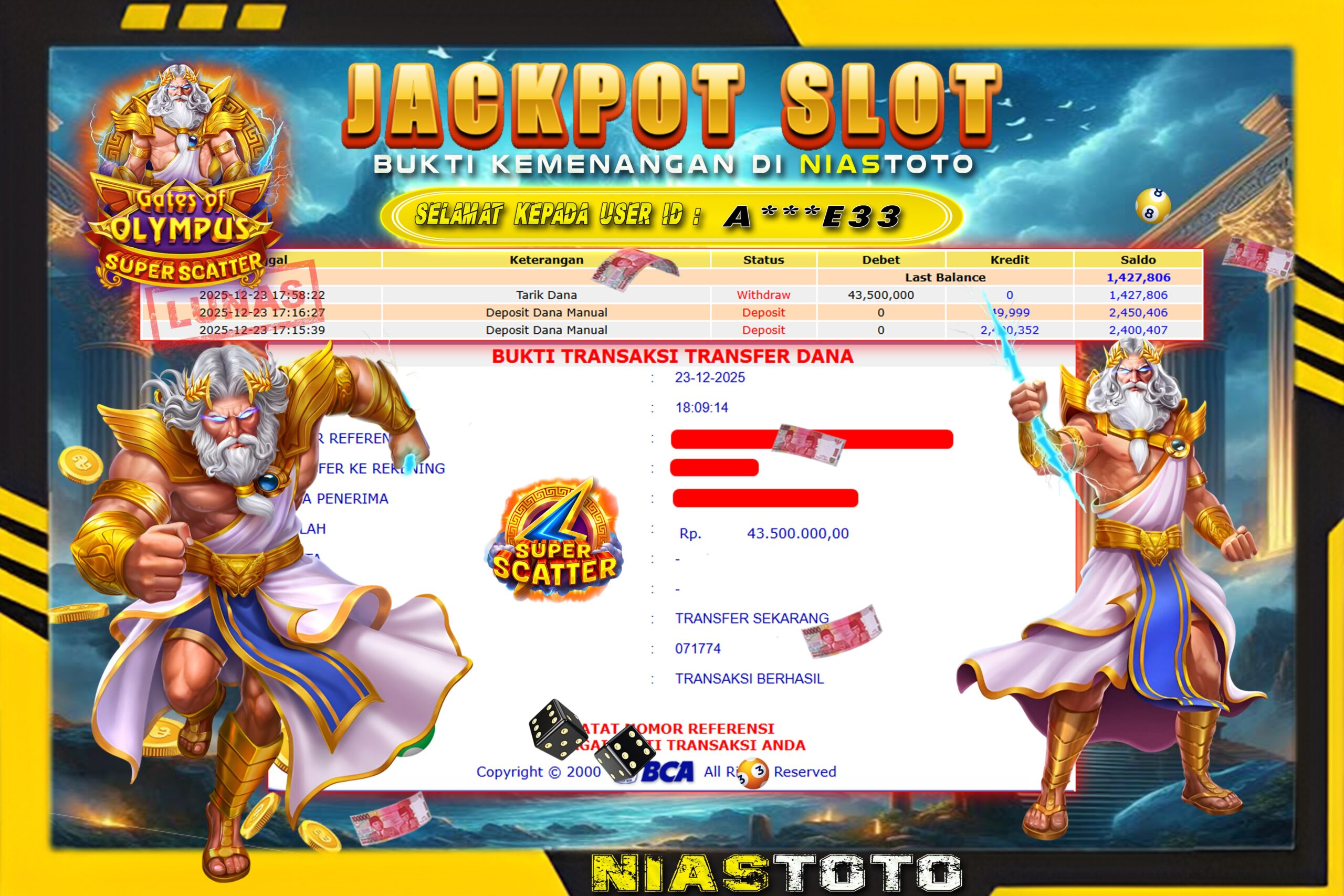
Selasa, 23 Desember 2025
BUKTI PEMBAYARAN JP NIASTOTO 23 NOVEMBER 2025 ========================================================================================== SELAMAT UNTU . . .
Read More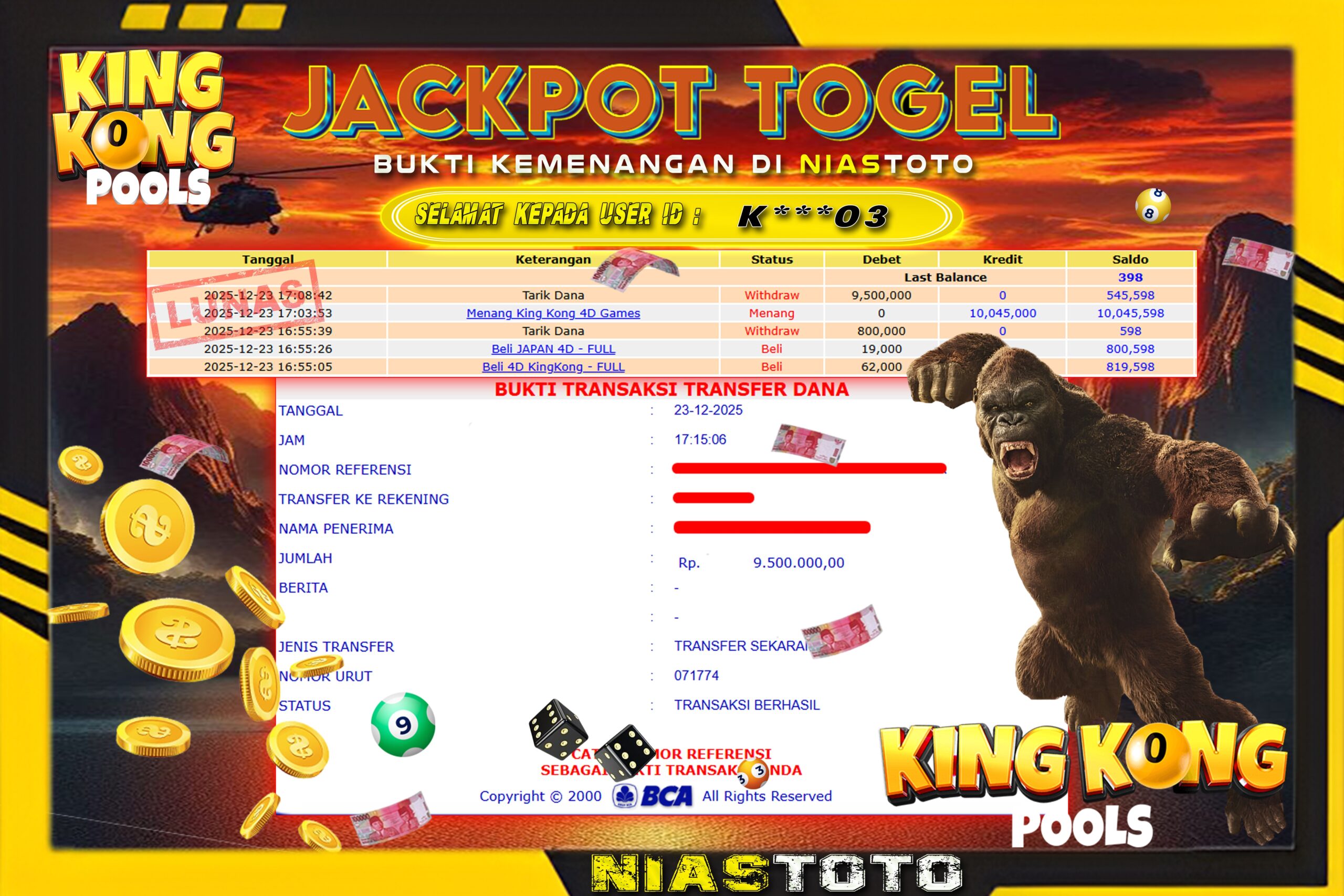
Selasa, 23 Desember 2025
BUKTI PEMBAYARAN JP NIASTOTO 23 NOVEMBER 2025 ========================================================================================== SELAMAT UNTU . . .
Read More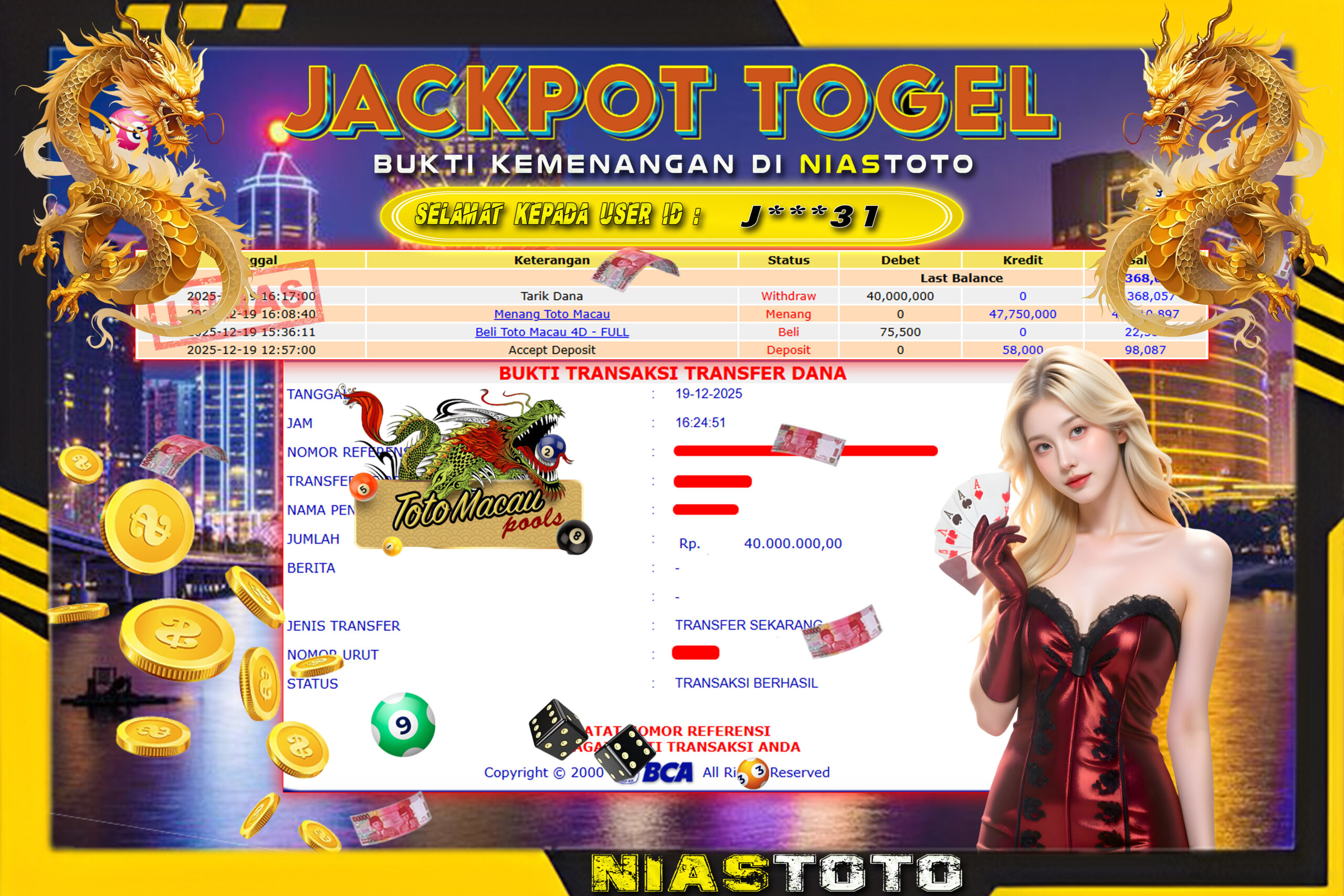
Jumat, 19 Desember 2025
BUKTI PEMBAYARAN JP NIASTOTO 19 NOVEMBER 2025 ========================================================================================== SELAMAT UNTU . . .
Read More